


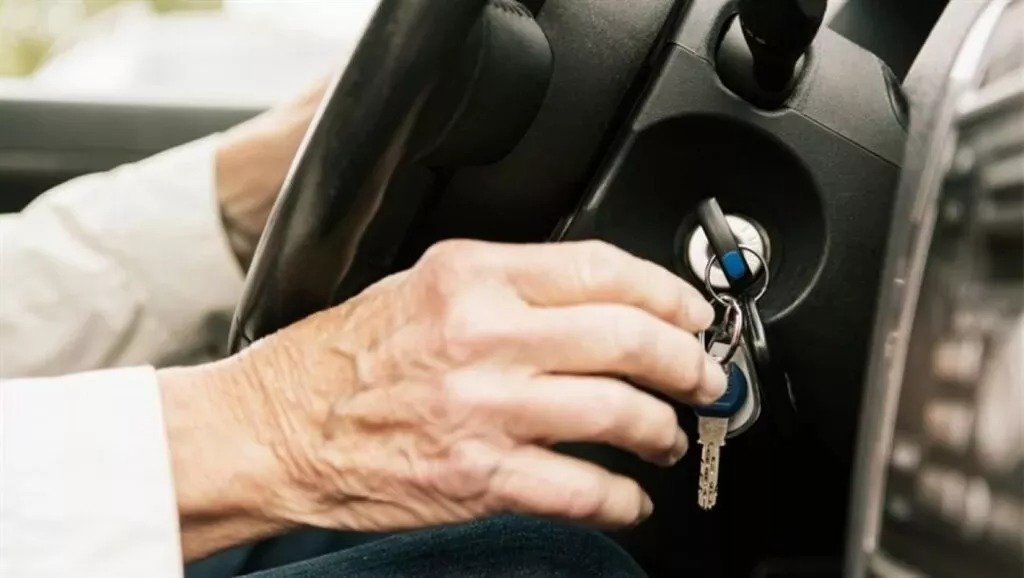
Elderly individuals are raising serious concerns about high vehicle insurance premiums imposed on drivers over 70 years old, according to testimonies presented at a recent parliamentary committee meeting.
Representatives from elderly advocacy groups emphasised that the disproportionately high costs are forcing many senior citizens to abandon driving altogether, subsequently leaving them isolated in their homes and vulnerable to depression, loneliness, and potential abuse.
Road safety statistics reveal complex picture
Statistical evidence presented during the meeting highlighted that 19.4% of road fatality victims between January 2023 and September 2024 were over 75 years old. Additionally, one in two pedestrian fatalities during this period involved individuals over 70.
“We confirm that age is a risk factor, but not the only one,” noted a representative from the Traffic Department Headquarters during the parliamentary discussion, which brought together the Human Rights Committee and the Labour, Welfare and Social Insurance Committee.
George Louka, Director of the Road Transport Department, cited data from the Road Safety Observatory supporting the correlation between age and road vulnerability.
Allegations of age discrimination
Dimos Antoniou, President of the Third Age Observatory, characterised the situation as “clear ageism or even hate speech,” describing how elderly individuals with decades of accident-free driving records are being summarily dismissed by insurance companies.
“This doesn’t just lead to depression, but also risk of abuse,” Antoniou stated, adding that his organisation is considering taking the matter to the European Court of Human Rights for violations of elderly rights.
Systemic challenges compound the problem
The discussion also highlighted broader infrastructural issues affecting elderly mobility. Elias Demetriou, President of the Volunteer Council representing the Parliament of Elderly, pointed to inadequate public transportation: “It’s unacceptable that in an entire refugee settlement like Strovolos C, there’s no bus service, forcing elderly residents to walk up to two kilometres or rely on relatives for transportation”.
A representative from the Consumer Protection Service questioned why the state doesn’t intervene when insurance companies dramatically increase premiums for elderly drivers, suggesting that subsidies might be necessary.
Insurance industry perspective
A spokesperson for the Association of Insurance Companies defended industry practices, stating that only one in 18 elderly drivers is rejected by their insurers and forced to seek coverage through the insurance pool.
“Insurance companies change policies at different ages—some at 70, others at 75,” the representative explained.
“For an elderly person insured for the first time through the pool, the annual premium is €505, decreasing by 5% each year without accidents, eventually reaching around €450. There are no €750 premiums”.
The spokesperson concluded by citing the industry’s risk assessment approach: “When you insure someone, you assume a risk, and age is considered a risk factor”.
Legislative gap identified
A representative from the Commissioner for Administration’s office noted the absence of specific legislation in both Cyprus and the European Union protecting elderly individuals from discrimination.
Following the session, committee members indicated they would allow time for the executive branch to examine potential measures while simultaneously preparing legislative proposals to safeguard elderly rights.

