


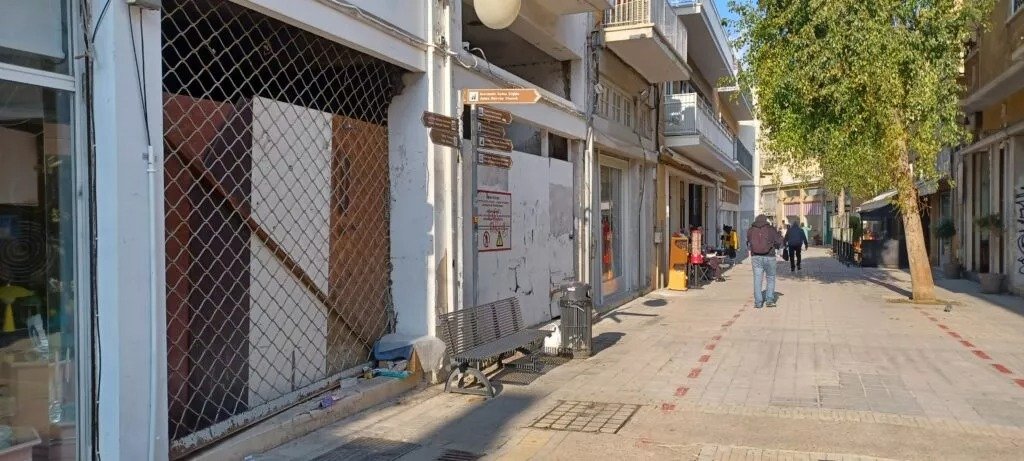
Nicosia’s historic walled city is experiencing severe economic decline, with local shopkeepers reporting that business numbers have fallen dramatically from 680 establishments in 1994 to approximately 130 today.

Antonis Koupparis, representative of the Organised Shopkeepers, Residents and Entrepreneurs of the Pedestrian Areas of Nicosia’s Historic Centre, described the situation as being at its worst possible point.
A philenews visit to the pedestrianised streets revealed 26 empty or closed shops on Ledra Street and an equal number on Onasagorou Street, with additional vacant premises on connecting side streets, creating an overall impression of abandonment.

“I feel like I could still work, but the question is whether it’s worth spending my hours for a day’s wage,” said one shopkeeper who has operated on Onasagorou Street for approximately 30 years.
“There used to be movement, customers, life”.
The area has seen a gradual transformation from clothing and footwear retailers to cafés and restaurants, though these too face sustainability challenges with business concentrated mainly on weekends.
High rental costs are reportedly deterring new businesses, with potential tenants often walking away after hearing landlords’ asking prices.
Some entrepreneurs invest thousands in renovations only to abandon their ventures, leaving behind debts and unpaid bills.

“Who lives and who dies until then?” is the question repeatedly raised by shopkeepers when discussing potential future improvements, including the planned operation of the University of Cyprus School of Architecture, student dormitories and ongoing infrastructure projects.
Lakis Zoidis, spokesperson for the Pedestrian Areas Shopkeepers Association, claimed the “countdown” for the walled city began after the pedestrianisation of the two main commercial streets, Ledra and Onasagorou.
However, other shopkeepers believe the historic centre could have been saved despite pedestrianisation if policies had consistently supported the area rather than encouraging residents and consumers to abandon it.
The resident population has collapsed from approximately 12,000 in earlier times to just a few dozen today, according to Zoidis, who stated that the market in the walled city was once “either the most robust in the Middle East or the most robust in Cyprus” before its current decline.
Ongoing infrastructure works are causing additional concerns. Shopkeepers pointed to the Trikoupi Street project, which took nearly 2-3 years to complete despite being only 800 metres long, raising fears about the impact of the planned redevelopment of Konstantinou Palaiologou Street.
“How will businesses survive, not only the shops on the street but also the remaining shops, given that this specific road is used by many to enter the city?” one trader questioned.
Access to the city is further complicated by weekend closures of Voulgaroktonou Street, either due to construction work or other activities.
Koupparis warned that shopkeepers would not remain passive in the face of these challenges, stating: “We will not stand with folded arms”.
Read more:

