


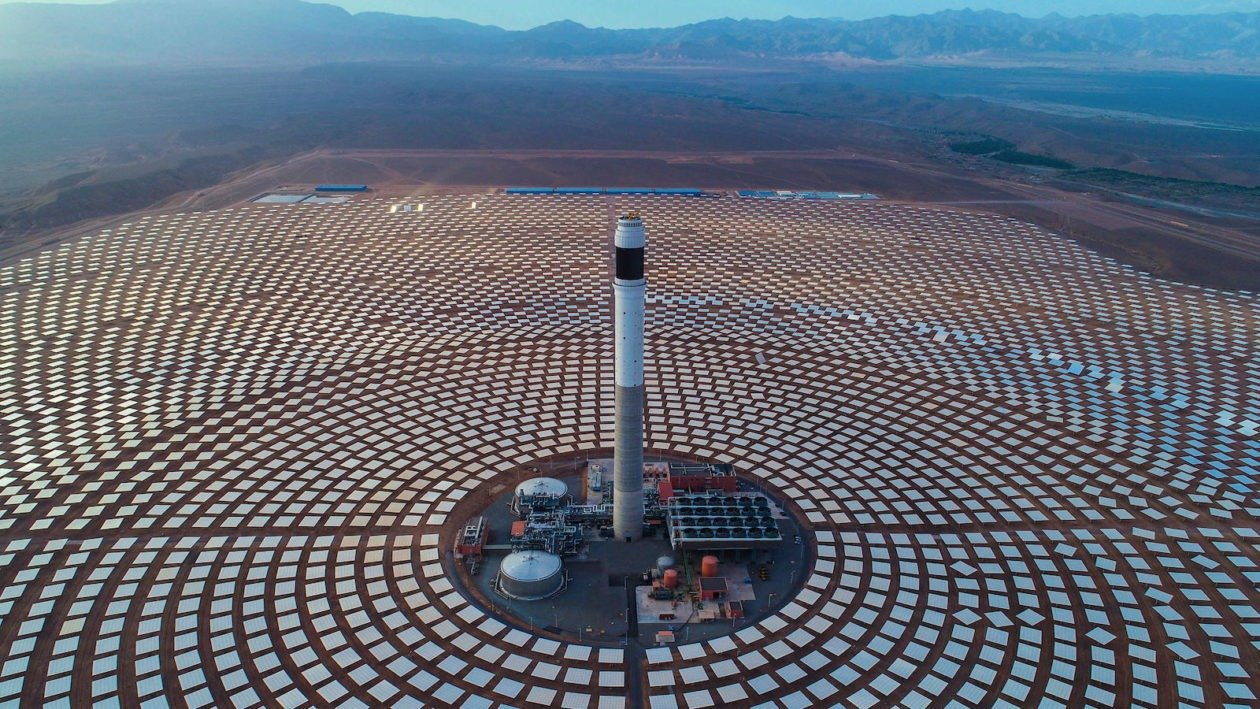
European countries are using renewable energy projects in North Africa to “greenwash” their economies while leaving local populations dependent on polluting fuels, according to a Greenpeace report released on Wednesday.
The report criticises European-backed renewable projects in Morocco and Egypt that produce energy primarily for export, saying they displace local populations and consume scarce water resources while both countries remain net importers of fossil fuels.
“The global north must take responsibility for reducing its own consumption and building domestic renewable capacity, instead of externalising socio-environmental costs to the global south”, said Hanen Keskes, campaigns lead at Greenpeace Middle East and North Africa.
In Morocco, TotalEnergies has invested $10.6 billion in a green hydrogen and ammonia plant set to begin production in 2027, while Germany has pledged up to 300 million euros for green hydrogen facilities, both targeting export markets.
Egypt has attracted significant European investment in its gas reserves following Russia’s invasion of Ukraine, but Greenpeace says this has led to soil erosion and water contamination.
The country is increasingly using polluting fuels domestically to free up gas for European export, the report found.
The Atlantic Council, however, argues that Egypt requires international investment to develop its renewable sector, saying the country could become “a global clean energy hub” with appropriate policies and partnerships.
Read more:

