


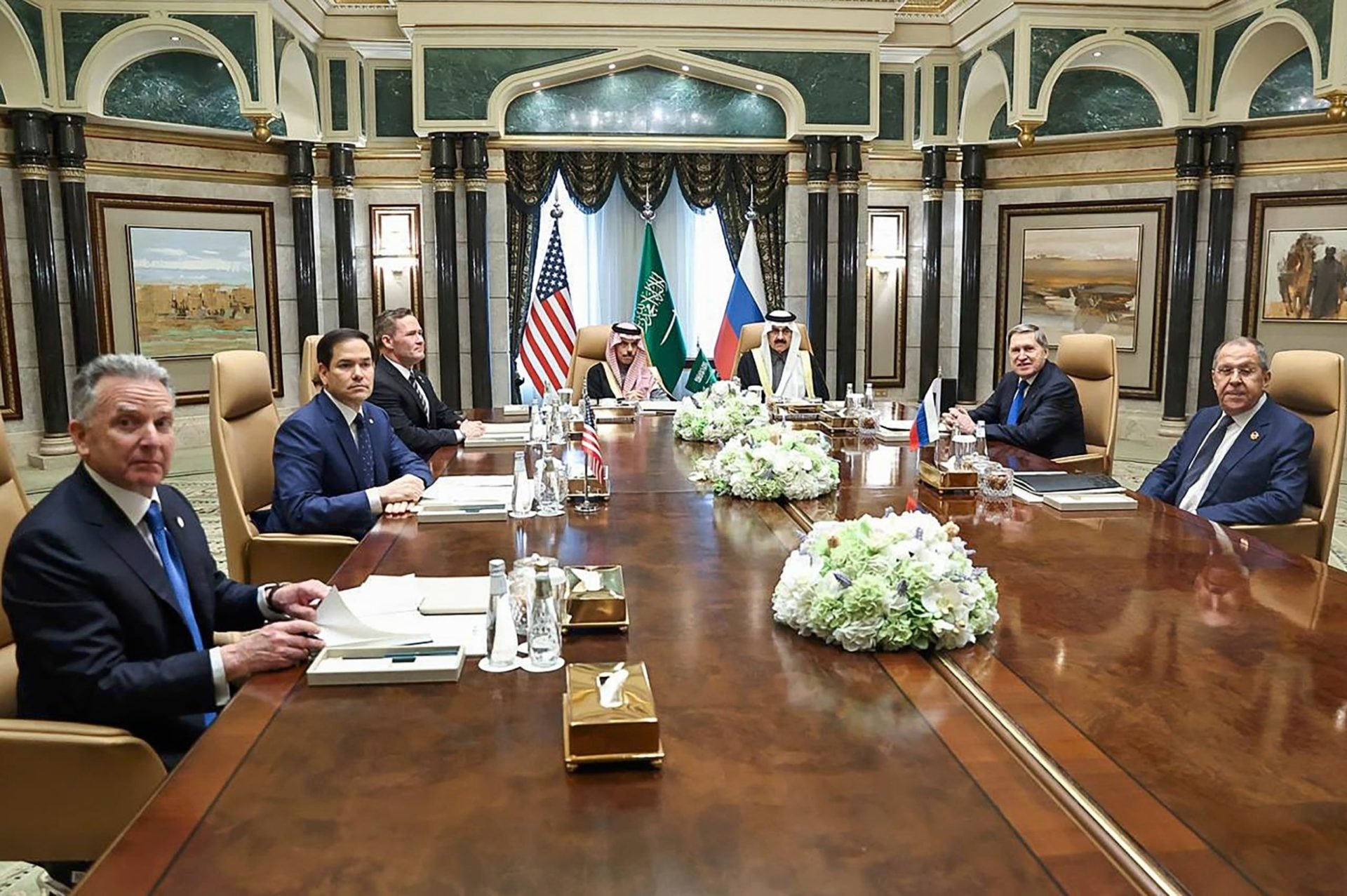
Ukrainian President Volodymyr Zelenskyy warned that Kyiv would reject any peace agreements made without its participation, as top US and Russian officials gathered in Saudi Arabia for their first direct talks since Moscow’s invasion of Ukraine.
The high-stakes meeting in Riyadh brought together Russian Foreign Minister Sergey Lavrov and presidential adviser Yuri Ushakov with US Secretary of State Marco Rubio, National Security Adviser Mike Waltz and Special Envoy Steve Witkoff.
“We cannot recognise any agreements about us without us”, Zelenskyy said, adding that Ukraine had not been informed about the talks in Riyadh.
The meeting follows US President Donald Trump’s phone call with Russian President Vladimir Putin last Wednesday, where they agreed to start immediate negotiations, marking a significant shift in Washington’s approach to the conflict.
Kremlin spokesman Dmitry Peskov said the Riyadh talks would focus on “preparation of possible negotiations on the Ukrainian settlement and the organisation of a meeting between the two presidents”.
Lavrov, quoted by Tass news agency, said Moscow would listen to US proposals but insisted that Europe had “no place at the negotiating table”. He ruled out territorial concessions to Ukraine during peace talks.
Kyiv demands full Russian withdrawal from all occupied territories, including Crimea, which Moscow annexed in 2014, and the regions of Donetsk and Luhansk.
The talks prompted an emergency meeting of European leaders in Paris, called by French President Emmanuel Macron, after it emerged that Washington appeared uncommitted to Ukraine’s NATO aspirations and that European leaders would be initially excluded from negotiations.
Zelenskyy announced plans to visit Saudi Arabia but emphasised his trip was unrelated to the Russia-US talks. Trump’s Ukraine envoy, Keith Kellogg, is scheduled to meet Zelenskyy in Kyiv on Thursday.
Russian Direct Investment Fund head Kirill Dmitriev, who may join the talks, emphasised the global importance of good US-Russia relations, saying both countries were crucial for resolving international conflicts.
European leaders, following their Paris meeting, pledged continued support for Ukraine but failed to outline specific security guarantees or reach consensus on a proposed peacekeeping mission.

