


Have we reached the end of the rule of law with Donald Trump?
Whether it’s the USA’s domestic policy with the new president trying to govern in a completely unconstitutional way, or foreign policy and the flagrant intention to violate international law, the situation is extremely worrying.
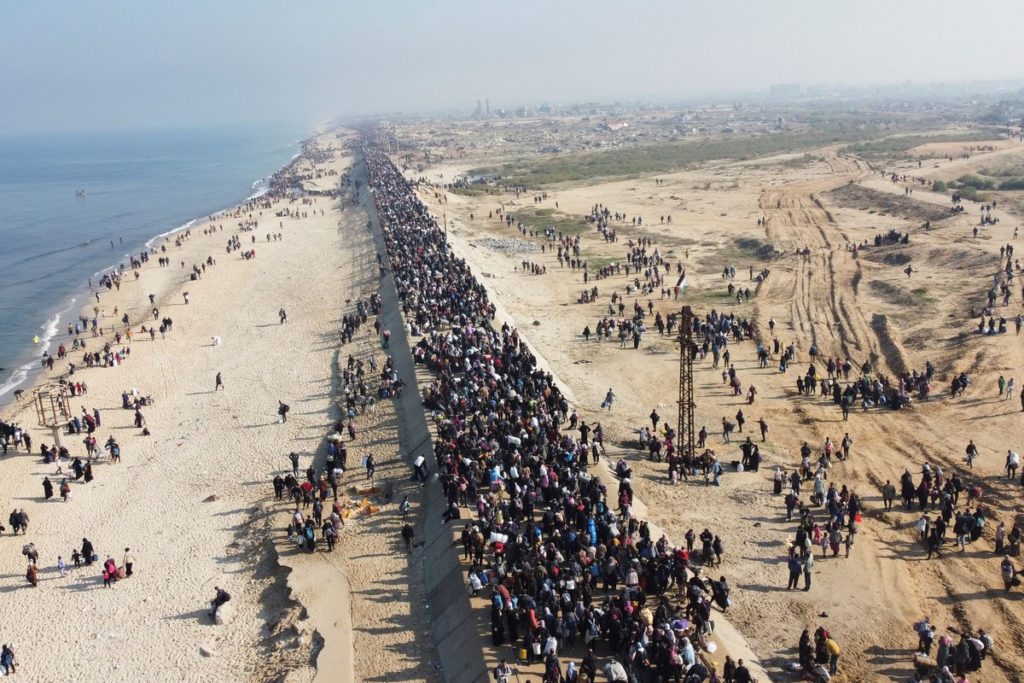
The straw that broke the camel’s back appears to be Donald Trump’s proposal for Gaza, with his plan to displace nearly two million Palestinian refugees to Arab countries to make way for an investment project in the region. “It’s illegal,” notes Aristotle Constantinides, Associate Professor of International Law and Human Rights Law at the University of Cyprus, in an interview with Phileleftheros.
The problem is that the international community can’t do much to stop Trump, who appears to disregard any notion of international law and sees everything as business.

Donald Trump wants to take control of Gaza and transform it into a Riviera. Leaving aside whether this is feasible, can such a thing be considered legal?
Under no circumstances can it be considered legal, whether done with the – supposed – consent of Palestinians or through coercion. Under the present circumstances, following the levelling of Gaza, which Trump’s proposal references, any consent from Palestinians would not be genuine or valid.
How does the American president’s proposal violate international law? Do you agree that it’s a form of ethnic cleansing?
The potential implementation of the proposal, depending on how it’s carried out, would violate the Palestinians’ right to self-determination, as it disregards their will and self-determination, violates numerous human rights, and would constitute forced displacement, especially if done violently, which is a form of ethnic cleansing and constitutes an international crime.
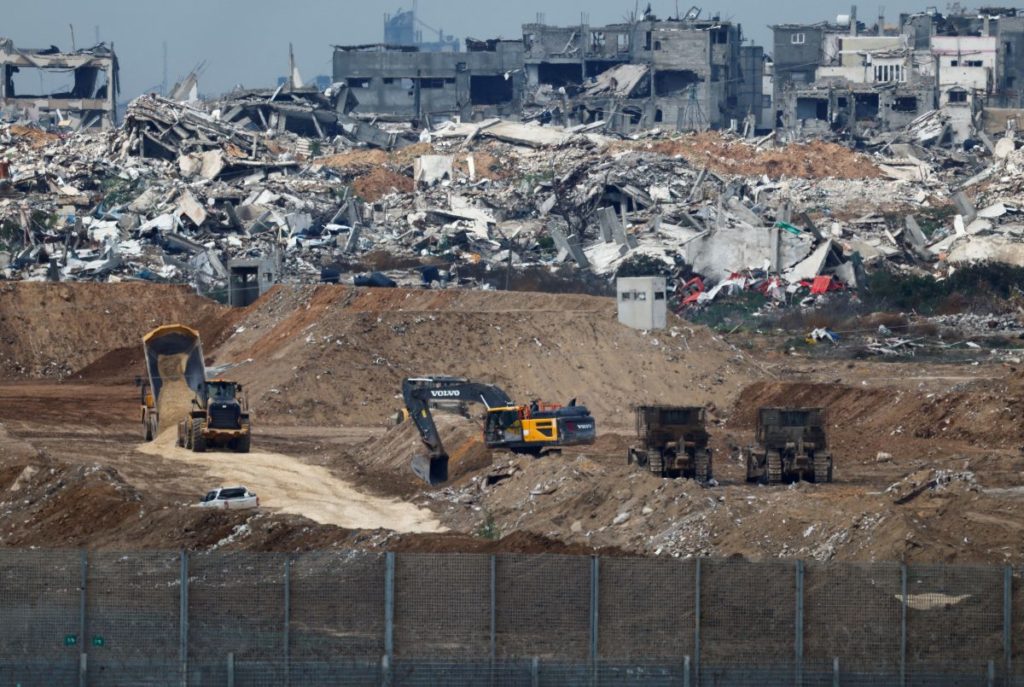
Of course, these violations don’t suddenly appear with Trump’s proposal. They complement the humanitarian catastrophe that preceded it with Israel’s levelling of the area, which the American president actually references in his proposal. Let’s not forget that Israel is being charged before the International Court of Justice for genocide, while the International Criminal Court has issued arrest warrants against Israel’s Prime Minister and Defence Minister for war crimes and crimes against humanity.
Let’s suppose that Arab nations eventually accept Palestinians into their countries and that Palestinians leave the Gaza Strip voluntarily. Would American control of the region comply with international law, or would it be illegal?
It would constitute illegal occupation of foreign territory. It would only be legal if done at the invitation of the legitimate representatives of the Palestinian people or following a UN Security Council decision, provided of course that there hasn’t been forced displacement of the population beforehand. Temporary/transitional administration of a region by a multinational force (even under the responsibility of a specific country) after a war isn’t unusual or illegal if done with UN Security Council approval. The most characteristic recent cases were in East Timor, where Australia had responsibility, and in Kosovo.
Does the mere fact that Trump’s proposal is being discussed create conditions where similar proposals and ideas might not only fail to provoke reactions in the future but become easily acceptable?
This appears to be the American president’s favourite – and cynical – tactic. We constantly hear groundbreaking ideas and proposals about foreign countries that disregard fundamental rules of international law, peaceful coexistence, and international cooperation.
What can the international community do to stop Donald Trump and potentially Israel, which seems to view his proposal favourably?
Unfortunately, not much. Theoretically, the UN Security Council could react, but this obviously won’t happen, as the US is a permanent member and has veto power. Economic and other sanctions could be imposed by individual states, like those imposed by the European Union and the US themselves against Russia in response to the invasion of Ukraine, but this is a rather remote scenario. It seems efforts will be made to avoid implementing the proposal, though this might normalise the unacceptable situation that has developed in Gaza, as worse outcomes will have been avoided.
How can the Palestinians respond? Especially if countries that are supposed to host them, like Egypt and Jordan, eventually succumb to pressure and say “yes”?
Palestinians have the right to refuse displacement and have the right to resist in various ways, depending on how their potential displacement might be pursued.
If the proposal is eventually implemented, do you believe it could create a dangerous precedent?
This wouldn’t be the first displacement in modern history. Displacement and ethnic cleansing are often the result of war, particularly ethnic conflicts, as we’ve experienced in Cyprus. Until a century ago, this practice was legal. Let’s remember that after the end of the Asia Minor war and Greece’s defeat, the 1923 Treaty of Lausanne forced an exchange/movement of Greeks/Christians from Turkey to Greece, with the exception of Greeks in Constantinople, Imbros and Tenedos, and Turks/Muslims from Greece to Turkey, with the exception of Muslims in Western Thrace.
Such an agreement today would be legally void, as it contradicts the prohibition of forced displacement, which is a peremptory norm (jus cogens) of international law. However, despite displacement being an international crime, international experience shows that displaced people very rarely return to their homes.
What could Trump’s plan mean for Cyprus? Could the solution to the Cyprus problem, for example, be moving Cypriots to Greece or Turkey and turning the island into a huge American military base or something else?
Such a scenario is extreme, even by President Trump’s standards (let’s not give him ideas…). However, I wouldn’t rule out him coming up with some groundbreaking and imaginative idea when and if he deals with the Cyprus issue, which would be guided exclusively by American interests (or those of his allies, which of course primarily include Israel, but also both Turkey and Greece), ignoring humanitarian or other parameters.
Unprecedented disregard for international law
The new American President has threatened to use military force to take control of Greenland. Are we living in an era where international law is being dismantled in the face of the most powerful’s ability to impose their will?
The dismantling of international law didn’t start with Trump’s second presidency, but it’s obviously accelerating recently. International law was experiencing a period of continuous flourishing, which began in 1990 with the end of the Cold War, though without eliminating the longstanding structural weaknesses in compliance with its rules, which is achieved when and if powerful states’ interests align and they decide to activate the (few and rather weak, but existing) enforcement mechanisms. Despite setbacks (e.g., the American invasion of Iraq in 2003), there had been a significant increase in states expressing their faith in various ways in an international order increasingly based on mutually beneficial international cooperation and commonly accepted rules of behaviour.
Trump’s first term shook this structure to some degree. Russia’s invasion of Ukraine was a significant blow, although Russian President Vladimir Putin tried to justify it with (obviously unfounded) legal arguments. There was also a reaction from the majority of states, with the US and European Union taking the lead in imposing strict sanctions. The tolerance, if not encouragement, from the US and European Union of Israel’s disproportionate reaction to Hamas’s terrorist attack and the subsequent levelling of Gaza was another blow. The reaction came mainly from the UN and international public opinion. However, states that broke the law always presented legal arguments, trying to justify their actions. In the American President’s second term, we’re experiencing an unprecedented disregard for international law and cynicism that the only motivation for Trump’s proposals for Greenland, Panama, and now Gaza is the (economic and other) interests of the US, serving the MAGA (Make America Great Again) narrative and policy. MAGA is inherently confrontational.
Trump imposed sanctions on the International Criminal Court as well. What does this mean, what will be the consequences?
This isn’t the first time the US has imposed sanctions on the International Criminal Court and specifically on the Court’s Prosecutor. They imposed sanctions during Trump’s first term in 2020 on the then Prosecutor and another Court official for Court investigations concerning American citizens. Now the sanctions (denial of entry, freezing of US assets) are being imposed for the Court’s actions concerning not only US citizens but also their close allies, such as Israel.
These sanctions hamper the Court’s functioning, encourage impunity for international crimes, and further erode international legality. The International Criminal Court asked the 125 states that have accepted its Statute to react to the sanctions, and indeed 79 of them signed a declaration supporting the Court. I welcome the fact that Cyprus and Greece co-signed the declaration.

