


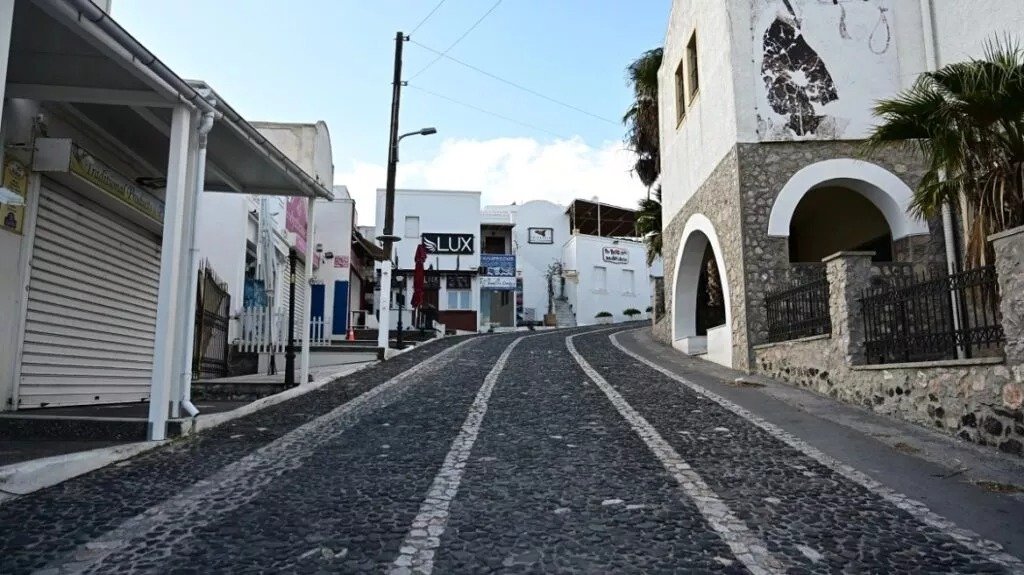
Greek authorities have declared a state of emergency on Santorini after a 5.2-magnitude earthquake struck the popular tourist island, the strongest in a series of thousands of tremors recorded since last week.
The emergency measures, effective until March 3, will allow the army to take a more active role in crisis management, Santorini Mayor Nikos Zorzos said on Thursday.
More than 12,000 people have fled the island by sea and air since tremors intensified at the weekend, with the main hilltop settlement largely deserted and shops closed due to fears of rock slides.
Scientists have recorded approximately 7,700 earthquakes on the island since the seismic activity began. Emergency services are relocating additional resources to the island, including generators, while social workers and psychologists are being dispatched to assist residents.
Prime Minister Kyriakos Mitsotakis visited Santorini today in what officials called “a show of solidarity”, amid growing concerns over the situation’s severity.
Seismologists remain divided over whether Wednesday’s larger earthquake signals an impending stronger tremor that could trigger a tsunami, or indicates the seismic activity is subsiding.
“We are still in the middle of the road, we haven’t seen any easing, any sign that it’s heading towards a regression,” said Vassilis K Karastathis, director of research at the National Observatory of Athens.
The island, which attracted 3.5 million tourists last year, has seen its tourism industry grind to a halt, with few visitors remaining.
“The vibe has definitely changed since the earthquake last night”, said Catherine Wilson, an American tourist who left for Athens on Thursday. “For the first time you could see locals being unnerved by it all”.
Experts say the geological phenomenon could continue for weeks, as local authorities maintain heightened emergency measures throughout the Orthodox Lent period.
Read more:

