


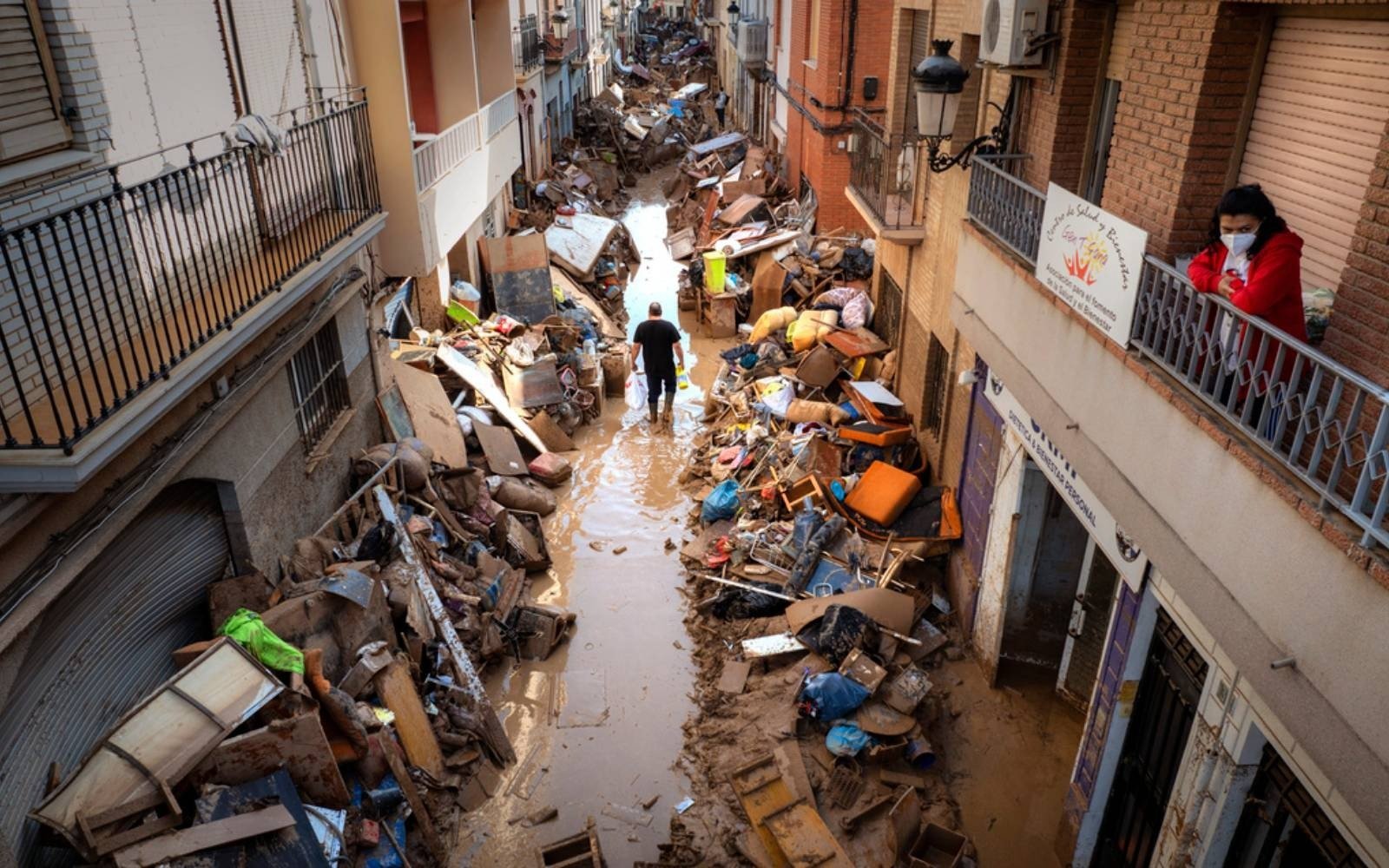
Spain’s leftwing coalition government has introduced “paid climate leave” allowing workers up to four days off during severe weather events, following floods that claimed 224 lives last month.
The legislation comes after criticism of several companies that required employees to work despite a red alert from the national weather agency during the October 29 floods, Spain’s deadliest in decades.
The companies claimed they received insufficient warning and delayed telephone alerts from authorities.
Labour minister Yolanda Díaz told public broadcaster RTVE the measure aims to “regulate in accordance with the climate emergency” ensuring “no worker must run risks”.
Workers must stay home when emergency authorities issue warnings, with the option to reduce working hours beyond the initial four-day period under existing emergency provisions.
The legislation, reportedly influenced by Canadian law, represents the government’s commitment to environmental policies, Díaz said, contrasting it with “climate denialism from the right”, according to El País.
Economy minister Carlos Cuerpo announced €2.3bn in additional flood relief as he warned extreme weather costs could double by 2050.
The October floods primarily affected Valencia, where conservative regional president Carlos Mazón acknowledged errors but rejected resignation calls, citing the “apocalyptic” scale of the unprecedented disaster.
Scientists attribute the increasing frequency and intensity of extreme rainfall across much of the globe, including Europe, to human-caused climate change, as warmer air holds more water vapour.
This has likely led to more severe flooding, though factors like flood defences and land use also play a role.
Two weeks after the deadly floods, torrential rains struck again, forcing 3,000 people to evacuate in Málaga.

