


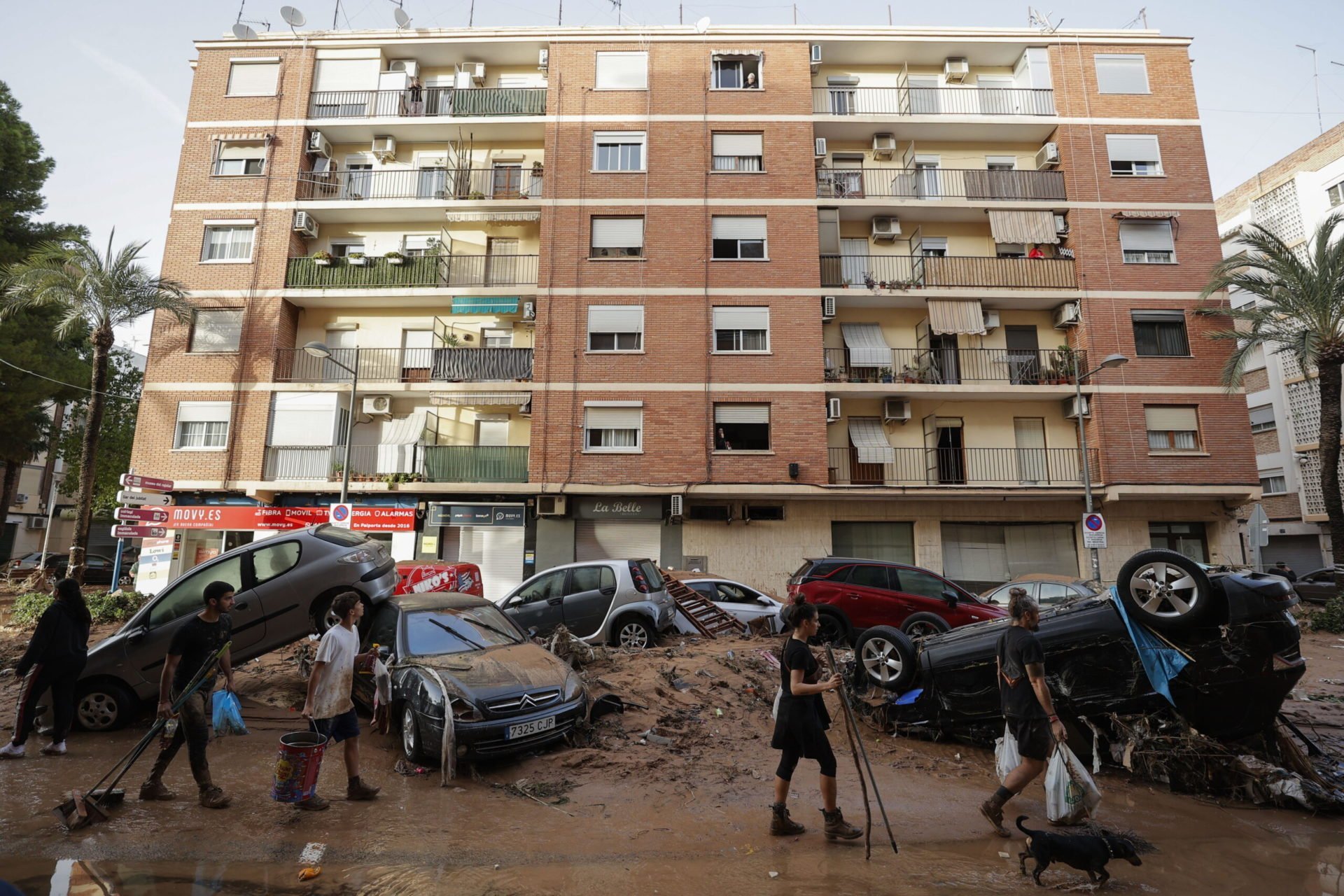
The death toll from devastating floods in southeastern Spain has reached at least 213, with authorities warning that the figure could rise as hope dwindles for the discovery of additional survivors.
Today, King Felipe VI, Queen Letizia, and Prime Minister Pedro Sánchez are set to visit the worst-hit areas, marking the country’s most severe natural disaster in recent history.
In a bid to bolster relief efforts, Sánchez announced the deployment of an additional 5,000 military personnel, increasing the total number of troops involved in rescue and recovery operations to 7,500. “This is the largest deployment of armed forces ever in Spain during peacetime,” Sánchez stated.
Alongside the military, 5,000 police officers and civil guards are being dispatched to support their colleagues already on the ground, as some communities continue to grapple with chaotic conditions days after the tragedy.
The Spanish Meteorological Agency (AEMET) reported that some areas experienced rainfall equivalent to an entire year’s worth within just a few hours. This catastrophic deluge has been attributed to a weather phenomenon known as “cold drop,” a localised weather pattern common along Spain’s coasts that scientists suggest may have been exacerbated by climate change, allowing warmer air to hold more moisture and intensifying rainfall.
Valencia has borne the brunt of the disaster, recording 210 fatalities, while Castile-La Mancha and Andalusia reported two and one death, respectively.
“This is the largest natural disaster in our country’s recent history,” Sánchez remarked, as authorities methodically sifted through the wreckage of vehicles trapped in underground tunnels and parking garages.
Despite the diminishing chances of finding survivors, search and rescue operations remain the priority for military and police forces, along with restoring transportation infrastructure to facilitate the distribution of aid and re-establish essential services.
As of now, more than 2,000 damaged vehicles have been recovered, power has been restored to 94% of residents in affected areas, and telecommunications are gradually coming back online.
In the suburbs of Valencia, search and clean-up operations continued under heavy emotional strain, with residents expressing grief and anger over what they perceived as a delayed response from authorities.

