


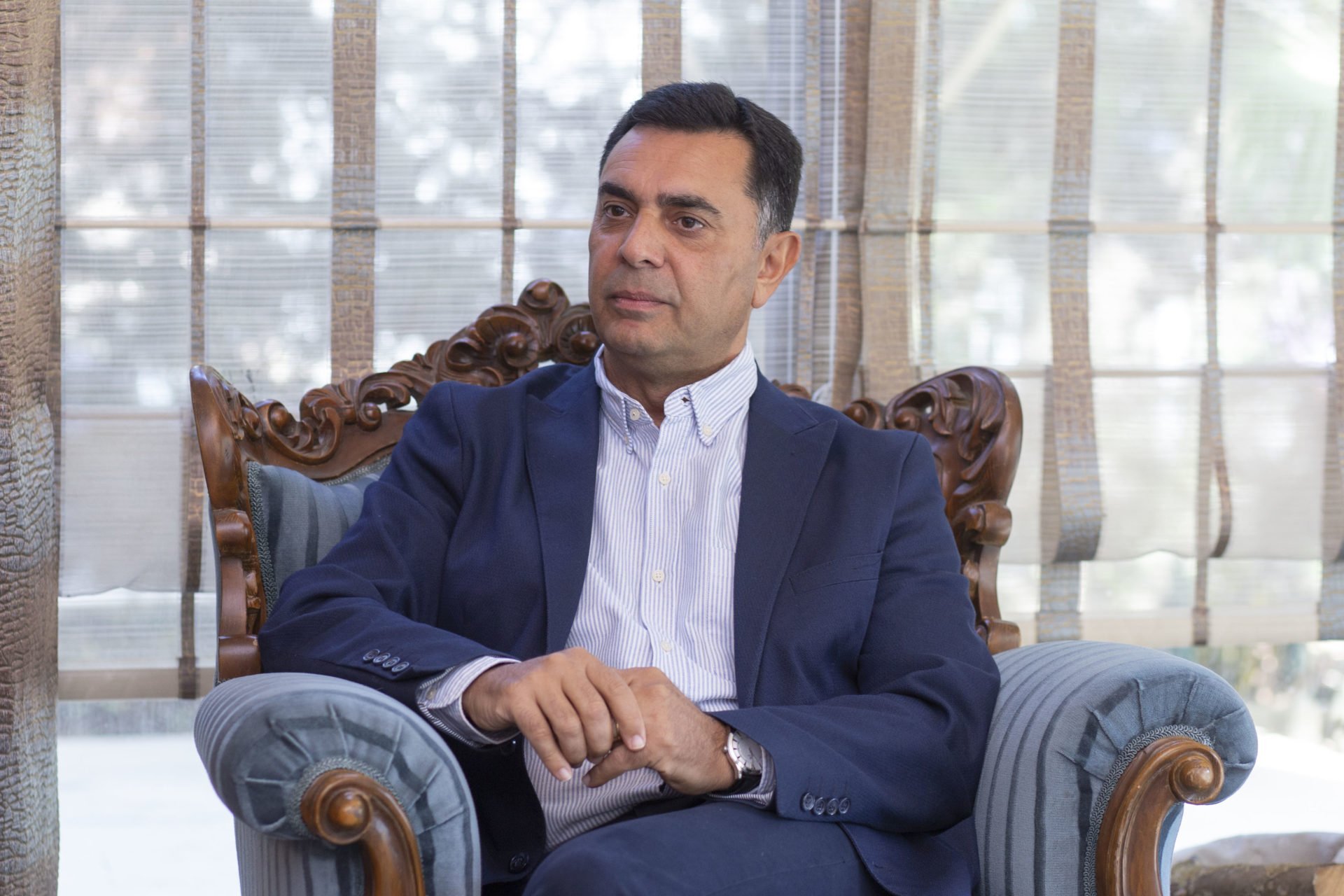
The dinner in New York between the two leaders and the UN Secretary-General creates prospects for further dialogue, however, former Turkish Cypriot negotiator Ozdil Nami believes it is too early to draw definitive conclusions.
He particularly notes the reference to holding an informal multilateral meeting between the leaders of both communities and the guarantor powers, emphasising that this is unprecedented in the history of Cyprus negotiations, and expresses his disagreement. He states that discussions about progress in negotiations should primarily concern the two communities, with other parties playing only a supporting role due to past international agreements.
Nami notes the positive circumstances regarding Greek-Turkish relations and suggests this could work favourably for the Cyprus issue, whilst also pointing out that if there is no prospect for resolution, the matter may be removed from the agenda.
Commenting on the political situation in the Turkish Cypriot community, Nami addresses the crisis surrounding the election of a new “president” of the unofficial parliament and predicts a leadership change in the upcoming Turkish Cypriot “elections”. However, he indicates that merely having a leader who supports the bi-communal, bi-zonal federation solution is insufficient. He challenges the Greek Cypriot side, stating they must demonstrate genuine willingness and determination to reach a solution.
He adds that any new process regarding the Cyprus issue should include a timeline, arbitration, and provisions for attributing responsibility to whichever side might reject the solution, emphasising that the status quo cannot continue.
Interview with Frixos Dalitis and Stelios Marathovouniotis.
How would you evaluate the recent dinner meeting between the two leaders in New York?
At the dinner, there was a confirmation of the fact that no common ground currently exists between the two leaders regarding the future of Cyprus talks so this was negative. But we also saw that two concrete decisions were taken. One on the resumption of the work to open more crossings which is positive. It should not have required a meeting with the UNSG to take this practical step to improve our daily lives but what can I say it is what it is. I am still a bit cautious about this decision because in the past the two sides turned the talks on this issue into endless debates on which gate to open, for what purpose, will be reciprocity and found a reason not to do it. I hope this time will be different.
The second decision is the more significant one. For the first time in the history of Cyprus talks the two leaders are saying we need to sit with the guarantors to discuss the way forward. As a format I find this decision misguided as the way forward should be decided by Cypriots and the role of other parties should be to help us in the areas where they have a say due to past international agreements. Never before did we have such a format. One can argue this will just be an “informal” meeting and the exchange of ideas is always good. We will see of course whether it will stay “informal” or whether the next step will be to turn the informal into formal but ok, we will see.
Going beyond the discussion of whether to format is appropriate or not I think we need to accept that this decision is a signal from the Turkish side that another chance may be given to settle the Cyprus issue based on UN parameters. Let’s not forget that until recently the Turkish side was saying based on the report of Maria Angela Holguin-Cuellar the UNSG should report to the UNSC that there is no longer common ground between the two sides for bicommunal bizonal federation and the time has come to accept two states on the island. I think now we see a pause in that approach. It seems the current positive atmosphere between Turkey and Greece dictates that everyone should avoid a crisis over the Cyprus issue and somehow a face-saving formula needs to be found to continue the dialogue.
Do you foresee any potential progress on the Cyprus issue? What do you anticipate might be the next significant step?
Yes, I do. It will be a very gradual one but I think we now have the beginning signs of a return to serious talks where both sides will have to shift from their current extreme positions. However, as you know in the past we had significant progress in the Cyprus talks but never the final result. So we should not jump to any conclusions positive or negative just yet. It is still too early to make predictions regarding the outcome. Something will start but will it finish and what will be the result is still unknown.
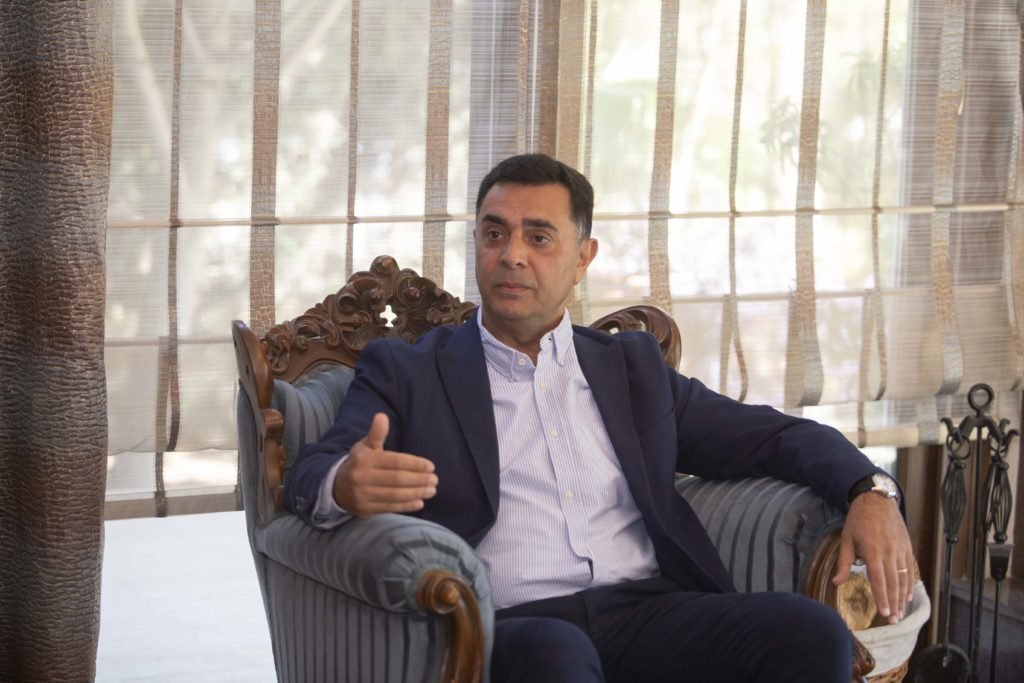
In your assessment, how close are we to meaningful negotiations on the Cyprus issue? What do you consider to be a viable starting point for these talks?
Let’s first define what should we understand from the term “meaningful negotiations”. For me, negotiations are meaningful when they have a serious chance to take us to a comprehensive settlement. For that to happen we must re-establish a common understanding of what is it that we want to achieve. The Turkish side is currently saying efforts to establish a BBF in Cyprus have been exhausted and we need to talk about a two-state solution. No one is accepting this position. The Greek Cypriot leader is saying BBF is the only solution and we need to resume talks as before, ignoring the past failures. No one is showing interest in that either. So the leaders must find a new path forward which both get something of what they want. This will require a lot of diplomatic work and the creation of the right incentives to make them shift from their current positions. These things take time. Once a negotiation process collapses it takes years even decades to put it back on the right track especially when there is no violence on the ground and no sense of urgency to change the status quo and this is exactly the situation in Cyprus. So no, I don’t think we are close to meaningful negotiations at all. We will see the beginning of the initial diplomatic moves to get us there but we will probably get to see some concrete results after the Presidential elections in the North end of next year.
Could the Guterres framework serve as a foundation for renewed negotiation efforts?
The Guterres framework is just a summary of the main outstanding issues. One can add or subtract from it. The main challenge for the resumption of talks is to agree on a new negotiation process where we will have a pre-agreed time limit, arbitration mechanism and consequences on the side that rejects the deal. Once that is done talks can start by confirming all past convergences, focusing on resolving initially the items on Guterres framework as a package and in the spirit of give and take and then finalising the rest hopefully with mutual consent but if not yes with arbitration.
In statements to Kıbrıs Postası, you suggested that a new chapter has opened in the Cyprus issue. However, you expressed doubt about progress under Tatar’s leadership. Do you believe he will maintain his stance on sovereign recognition until the end?
The question of sovereignty has always been a thorny issue and a factor used extensively when one side or the other does not want to or is not ready to negotiate. In Crans Montana, it was not listed within the Guterres framework which shows that it had been settled. The reason it is coming back to haunt us again is because the Turkish side has concluded that the GC Leadership is not serious about finalising a BBF agreement with true equality between the two sides. If the GC leader finds a way to demonstrate in a credible manner that a new attempt for BBF is justified and there will not be a return to the status quo in Cyprus if he leaves the table if GC voters reject a deal then I expect the Turkish side will give it another chance.
There’s speculation that Ersin Tatar’s tenure as leader of the Turkish Cypriot community is nearing its end, with Tufan Erhürman potentially poised to take over. What’s your perspective on this?
I also see a change in leadership coming in the North. This will be positive but one must not forget what happened with Talat and later with Akinci. Turkish Cypriots electing a pro-BBF leader is not enough. Even the full support of Turkey proved insufficient in the past. We should not jump to conclusions and say the whole problem is Tatar and a change will fix everything. The real change that needs to take place is in the mind of the Greek Cypriot leadership. A strong desire and determination to end the status quo, the courage to take the steps to make it happen. Unless these are in place we will not see a comprehensive settlement no matter who is the Leader of the Turkish Cypriot Community.
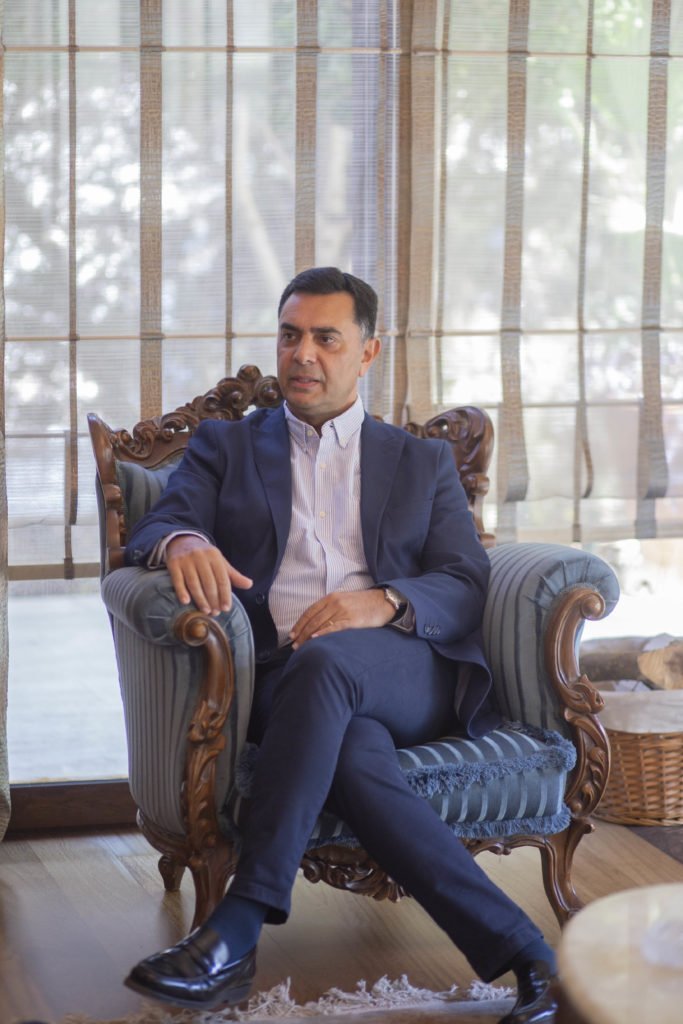
Is the recent political crisis within the Turkish Cypriot community likely to precipitate elections?
I am not sure. Things are still evolving with unprecedented actions being forced on us as citizens. Under normal conditions, the government should have resigned by now but the messages given are they will do whatever they can to stay in office till the end of their term. These of course are related to our Parliament and do not impact the office of the President. That election will take place in October next year.
What is your assessment of Nikos Christodoulides?
I got to know Mr Christodoulides better during our time around the negotiating table. He was always easy to communicate with and I think we understood each other well. Given that we have left behind almost 60 years of talks, one failed referendum and one failed conference, he now has the unenviable responsibility of thinking out of the box and doing something new. This requires a lot of political will and courage. It is up to him to demonstrate what kind of a legacy he will leave behind.
How do you anticipate Turkey will position itself in any new dialogue on the Cyprus issue?
I think their top priority will be to see if they will be able to see the end of the Cyprus issue if they re-engage seriously. The Cyprus problem is blocking the huge potential Turkey has to improve its relations with the EU, the potential benefits it can get from being an actor in the energy equation in the Eastern Mediterranean, and its relations with the US and even Israel. So I believe they would play a very constructive role as they did until Crans Montana if they see a credible path to end the status quo on the island. Right now they don’t. They are also mistrustful towards the UN and the EU as these institutions did nothing after the Annan plan and Crans Montana to show the Greek Cypriot leadership that their rejectionist approach is not acceptable. Everyone must take lessons from those experiences and go to Turkey with solutions that will address those concerns.
To what extent do you think the improving relations between Greece and Turkey might facilitate a new initiative on Cyprus?
Better relations between Turkey and Greece always help. However, we as Cypriots must also be aware that to protect their good relationships these two countries may choose to avoid seriously engaging in the Cyprus issue if they don’t see us being genuine about solving our problem. So for a positive spillover effect, we need to do our part and demonstrate our determination to work together to end the Cyprus problem.
Could an informal five-party conference catalyse progress on the major aspects of the Cyprus issue?
Although I don’t agree with this format I think under the current circumstances with the leadership on the island it is our only chance to trigger some positive movement. I hope this happens without much delay and we see where we go next.
In your view, is there still a realistic prospect for resolving the Cyprus issue? What implications would another diplomatic impasse have?
I think there is only one path for us to take to solve the Cyprus problem. We need to resume negotiations from where they were left off but this time with a pre-determined calendar, a predetermined arbitration mechanism and a pre-determined consequence on the side that leaves the table or says No in the next referendum. The consequence of the Turkish side rejecting a deal would be more isolation and if it is the Greek Cypriot side who rejects the BBF then the consequences must be a two-state solution. This is the hard reality that we are faced with now and we need courageous leaders who can tell this truth honestly to their respective voters. Until this is done we will not have a resolution to the Cyprus issue, we will have many ups and downs in the talks but never end.
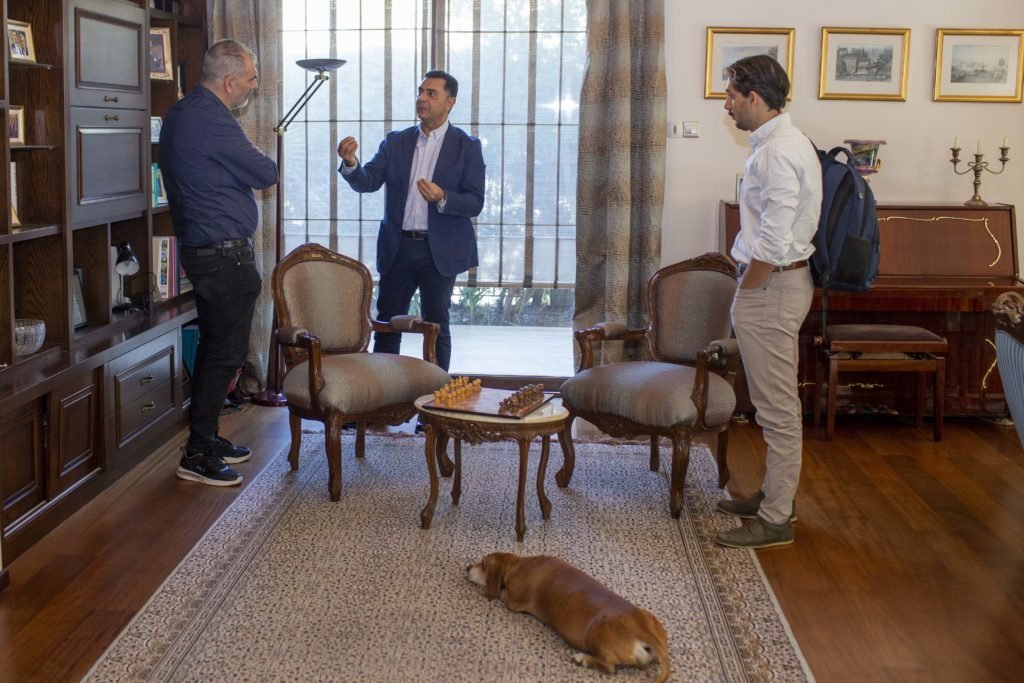
(Pictures by George Christoforou/MATTPRESS)

