


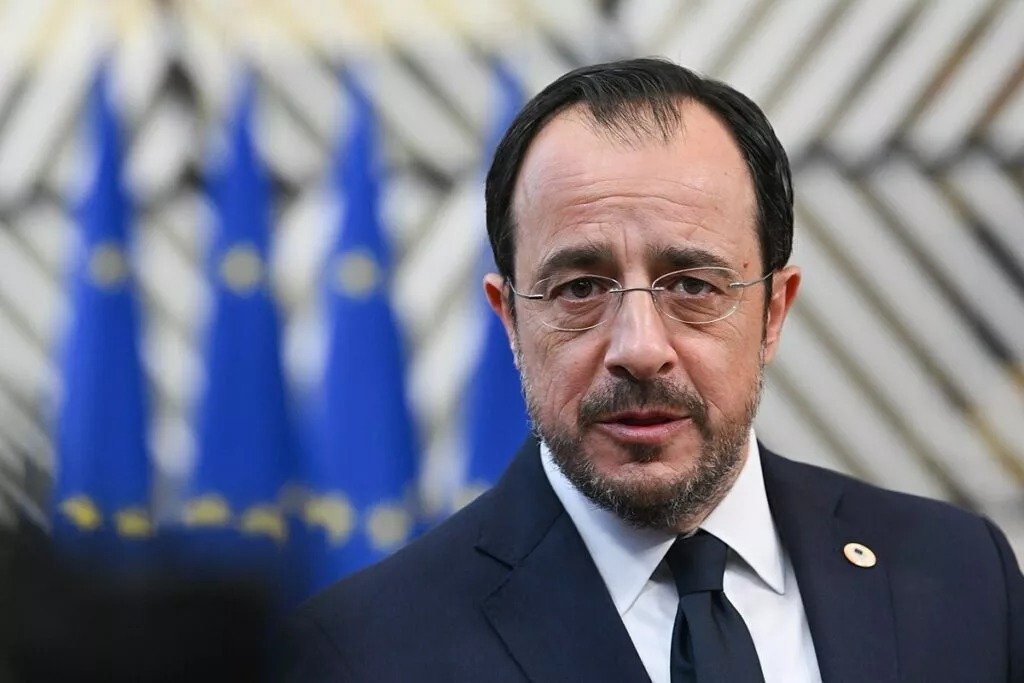
A month ago, a major survey by Philenews, in collaboration with Prime Market Research & Consulting, which involved 15,452 participants, revealed a shocking result: only 9% have a positive opinion of President Nikos Christodoulides.
A month later, two more surveys have confirmed the Philenews findings, solidifying the deeply disappointing conclusion for the President.
One survey was conducted by Symmetron Market Research for 2Dots Ltd, and the other by RetailZoom for the newspaper Politis.
The first survey showed a negative rating of 68% for Christodoulides’ presidency, while the second indicated that just 14% of respondents held a positive view (7% rated his performance as excellent and another 7% as satisfactory).
Worse still, when asked whether he has the ability to govern Cyprus effectively, a staggering 78% said no.
It’s important to remember that this dismal image has formed just 20 months after the President’s election.
Never before has a Cypriot president seen their popularity drop so sharply in such a short time.
Not even the late Demetris Christofias, during the Mari disaster, faced such low approval ratings.
At first glance, it’s clear that a large proportion of those who voted for Christodoulides—who was elected with 52% of the vote—now disapprove of his governance.
Even among those who chose him in the first round of the election (32%), thus marking him as their conscious first choice, many no longer hold a positive view.
The reasons for this disillusionment are numerous. Chiefly, a significant portion of the electorate believed that by electing a politician not backed by one of the two major parties, he would be free from their burdens.
They hoped he could address the systemic issues associated with party-led governments, such as nepotism, favouritism, and corruption. However, they soon realised that from the outset, his administration continued down the same dysfunctional path.
Furthermore, many believed in his promises of changing attitudes, of fighting corruption with tangible results, and of boldly challenging the status quo.
He spoke of modernising the political landscape. But reality quickly set in.
He displayed frustrating indecision, lack of courage, and ultimately ineffectiveness.
On no major issue did he dare to take decisive action.
In the fight against corruption, instead of tackling it head-on, he seemed to aid in undermining those fighting it.
In short, he has fallen far short of the high expectations placed on him by the public.
Some might argue that he has implemented technocratic policies in certain areas. But it would be unthinkable for any government not to handle such matters. Citizens expected to see change on the more critical issues, yet they remain disappointed.
Others might suggest that he still has three more years to prove himself and improve his image.
However, it seems unlikely that the characteristics he has shown so far—the ones that have thoroughly disillusioned the public, including many of his voters—will drastically change.
Even those who voted for him, banking on his youth and reputation as a “good guy,” now seem to regret their decision.
The key question is: Is the current system not disastrous for the country? A system that allows no one to challenge a sitting president (not just this one) regardless of how mediocre, harmful, or damaging they may prove to be?
This system was decided 64 years ago when the country’s constitution was drawn up, and it ensures that no one can send a president home mid-term, leaving the country stuck with them for five years.
Is it right for society to voice dissatisfaction with a president, only to be forced to tolerate him for another three years?
Is it fair for society to be misled by promises or misjudge a candidate’s abilities and then be unable to correct that mistake?
President Christodoulides himself has said, “In many areas, we are still operating under the terms of 1960, and that’s why we can’t respond as we should to the needs of the citizens. We are in 2024; the state must move forward and modernise all its institutions.”
Perhaps it’s time to start at the top.
It’s time to find a way for citizens to call for a change during a president’s five-year term.
Maybe through a referendum, triggered if two-thirds of parliament supports it.
Let the experts work out how this can be achieved, with an amendment to the constitution if necessary.
Otherwise, it’s criminal to leave a country at the mercy of a president for five years, simply because a mistake was made at the ballot box.

