


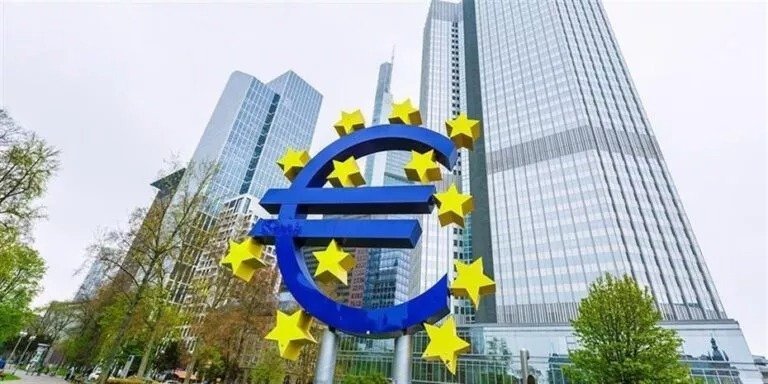
One of the European Central Bank’s (ECB) core objectives, as clearly stated in its policy rules, is to maintain price stability.
This, it emphasises, is the best contribution that monetary policy can make to economic growth and job creation.
The ECB adds: “We keep prices stable by ensuring that inflation—the rate at which prices for goods and services generally change over time—remains low, stable, and predictable. We aim for an inflation rate of 2% over the medium term. Our commitment to this target is symmetric: we consider excessively low inflation just as harmful as excessively high inflation.”
The ECB’s efforts to rein in inflation appear to be largely successful, following its recent decision to cut interest rates by 0.25%.
However, this has also led to investment hesitation, a slowdown in consumption, and ultimately, economic stagnation in several Eurozone member states.
ECB President Christine Lagarde acknowledged after the most recent board meeting that economic activity in the Eurozone was weaker than expected, with industrial production being particularly volatile over the summer months.
It is evident that any effort to achieve one goal creates side effects at another level.
Weak economic growth, combined with the fact that prices in certain product categories remain high, raises the risk of concerning phenomena.
Specifically, economists are pointing to signs of stagflation.
Stagflation, or supply-side inflation, refers to inflation not accompanied by a corresponding increase in production, which may remain stagnant.
According to the law of supply, price increases typically attract more supply as businesses become interested. However, stagflation results in rising unemployment alongside rising inflation.
Economists have noted that inflation, particularly in the Cypriot economy, has remained around 2% for some time, despite ongoing interest rate cuts.
This persistence, combined with the observations of the Consumers’ Association President, Marios Drousiotis, that food prices not only remain high but have increased in some cases, is cause for concern.
The Consumers’ Association reports that prices not only remain stable at high levels but are rising, albeit slightly, month after month.
“Various reports mention that inflation has fallen, and this is true. However, this does not mean that prices have dropped; they remain at the high levels we have seen in recent months,” the association emphasises.
The only difference with reduced inflation is that prices “are rising more slowly than last month,” with particular concern regarding food prices.
“Price increases are much more pronounced in the food category,” consumers report, expressing their worries.
In conclusion, while inflation is decreasing, economic growth is also slowing, and prices for essential goods, such as food, remain high.
Signs of stagflation are emerging, which is particularly concerning.
As a result, the balance is precarious, and any decisions made at the central level must take all factors into account, especially regarding small economies like Cyprus, which are disproportionately affected compared to much larger economies and markets.

