


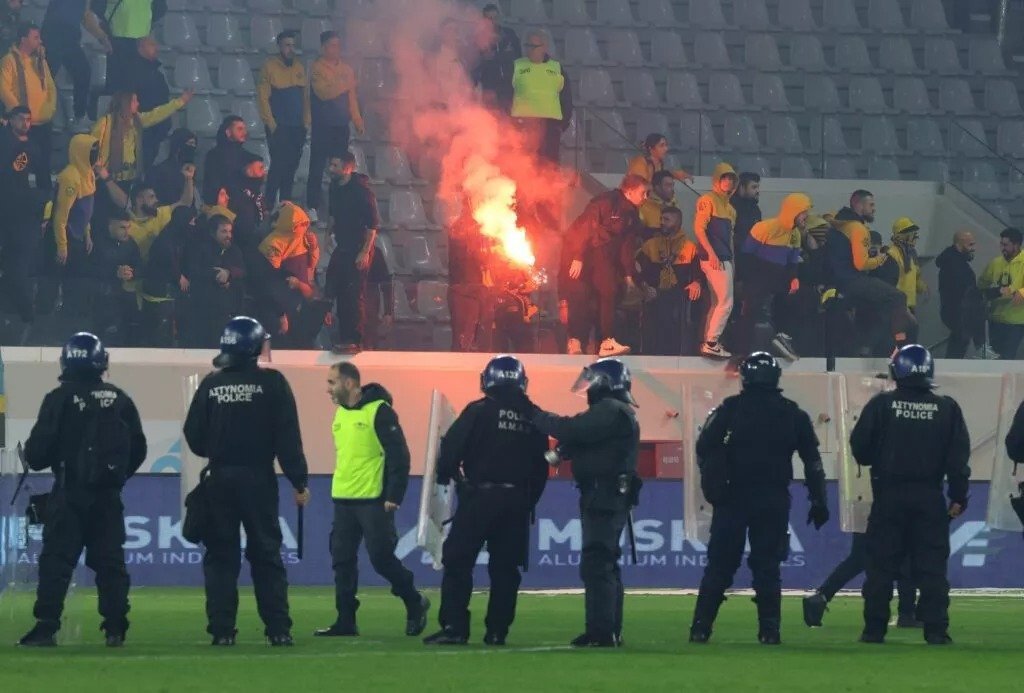
The new football championship has begun smoothly—at least for now. Last season, there was an uproar, not so much about the quality of play but more about the escalating violence among fans. This wild beast of violence is something we’ve been trying so hard to tame.
Instead of focusing solely on the games, the real challenge has become implementing measures to restore lasting calm and peace, far from the absurdities that have plagued the sport. The disagreements, even conflicts, about the ban on fan movement continued throughout the summer holidays.
The exchange of arguments and counterarguments about these measures, which are seen as potentially effective in preventing incidents, has been of significant interest. But who is right, and who is wrong?
Is it really as black-and-white as it seems? To what extent is the essence of sport strangled by such restrictions and disruptions? The reality is that, despite starting each season with so much hope and optimism, we seem doomed to end up in the same repetitive cycle, passive spectators of the same issues…
The issue of violence in stadiums isn’t as superficial as we may want to believe—it has much deeper roots than we suspect. We often focus only on the law enforcement side, which is undoubtedly crucial when incidents of violence erupt inside or outside sports venues. However, along the way, we overlook the fact that promoting sports in a society is primarily a matter of education and culture.
It’s truly unfortunate that in sports in general, but especially in football, certain disruptive elements have overturned everything.
The values of fair play, the magic of athleticism, healthy recreation, competition, achievement, and so much more have been replaced by the forces of extreme commercialisation, unchecked competitiveness, egocentric superiority, humiliating opponents, and winning at any cost—whether through fair or foul means, it matters little—and, above all, corruption and deceit. These elements have sadly infiltrated and eroded the fabric of the sport, just as they have infiltrated wider society over the past few decades.
In truth, it’s not far-fetched to claim that the phenomenon of fan violence—hopefully banished this season—thrives within a broad and deep spectrum of societal issues.
These include the fragmentation of society, the alienation of people, especially young people, who remain adrift without role models, personal and professional dead ends, marginalisation, poor living conditions, and poverty.
Responsibility lies heavily on the shoulders of many different actors. What’s certain, however, is that any strict, immediate measures end up not only being half-measures but also dismantling the very allure of the sport.
Read more:

