


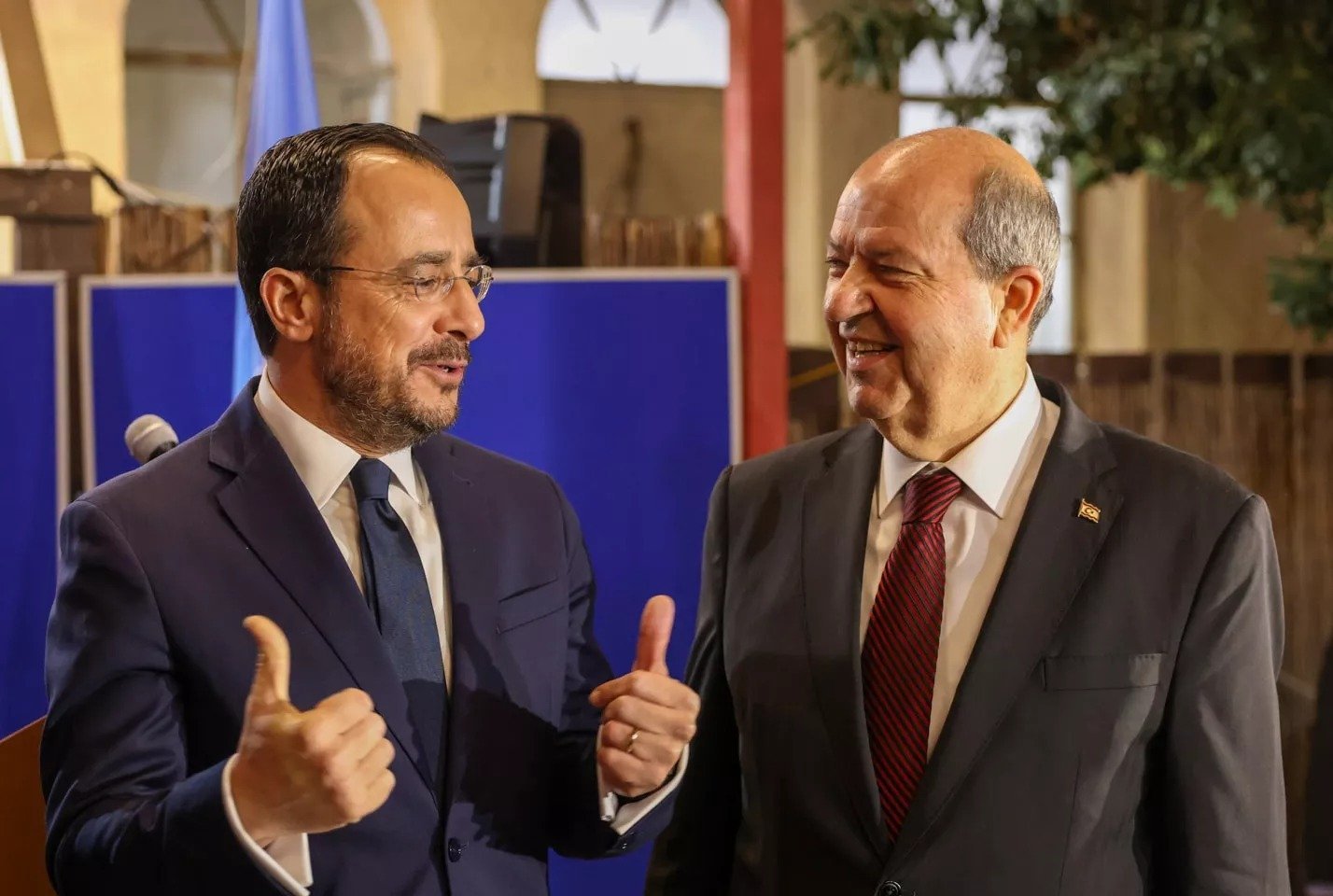
Even yesterday, President Christodoulides reiterated that developments in the Cyprus issue are forthcoming. This has been stated for some time now, initially by the President himself, who, based on his personal conversations, made it clear that significant developments are on the way. What these developments will be and what they will entail will become known very soon.
It is certain that there will be developments. The question is not about the form of these developments but about who truly wants them and whether they have the intention or willingness to contribute so that the new effort to be undertaken by the UN Secretary-General will indeed be effective.
Speaking yesterday during their annual meeting with the heads of diplomatic missions of the Republic of Cyprus, Nikos Christodoulides said (among other things) that there might be some developments even within August to early September. He directly stated, “we are ready.”
I personally don’t know if I will believe that President Christodoulides is indeed ready for these upcoming developments.
Of course, he may know (through his meetings with Mr. Guterres and Ms. Holguin) what these developments are, which is why he speaks with such ease and certainty about what is coming in a few weeks.
However, the Secretary-General himself and the broader international organisation have not accustomed us to a “fair game” in the Cyprus issue, in a way that would justify the Greek Cypriot leadership’s relative ease regarding the occasional developments.
History surrounding the Cyprus issue shows that reciprocity in concessions and goodwill gestures from both sides is sought to create momentum. There has never been a consideration of who should and shouldn’t make gestures, nor was there ever concern about the logic or legality of the actions both sides are called upon to take.
Thus, we have often seen the same scenario in the Cyprus issue. The Turkish side makes a slight concession from its unreasonable and excessive demands, which neither the international organisation nor the international community accepts, and it is considered a gesture.
The Greek Cypriot side is pressured to make gestures that go beyond the limits that no other state – even those intervening to help in the Cyprus issue – would accept to implement themselves. Yet, they have all the “goodwill” to pressure the Greek Cypriot side to make these “gestures of goodwill.”
The Turkish side currently appears intransigent and simultaneously signals that it does not want any development in the Cyprus issue, but rather recognition of its separate entity based on sovereign equality. It knows, of course, that what it demands has little chance of being accepted by the international community.
If, on the other hand, the Greek Cypriot side takes actions that satisfy some of the Turkish side’s demands, then the international community will be fully prepared to support these “gestures.” Therefore, the longer the developments are delayed, the more the Turkish side believes it can gain.
The Greek Cypriot side appears relaxed today, urgently seeking developments in the Cyprus issue. But what happens if these developments are accompanied – once again – by the need for some gestures? Will the Greek Cypriot leadership continue to express itself with such ease?
The example of the “gesture of goodwill” for the opening of the checkpoint at Mia Milia has given a taste of how the United Nations and the international factor see the path to restarting efforts on the Cyprus issue.
To what extent the Greek Cypriot side is willing to make similar gestures will become apparent very soon.
Although we predict even now that it will not continue to be as comfortable as it appears today.

