


“We Spread Butter on the Bread of the Solution’s Enemies”
This was the title of Serhat İnçirli’s article in Yeni Düzen last Tuesday, two days after the results of the European elections led to the non-election of a Turkish Cypriot candidate to the European Parliament. Serhat İnçirli is one of the most progressive journalists advocating for the resolution of the Cyprus issue in the occupied territories, and Yeni Düzen is the mouthpiece of the left-wing Republican Turkish Party (CTP).
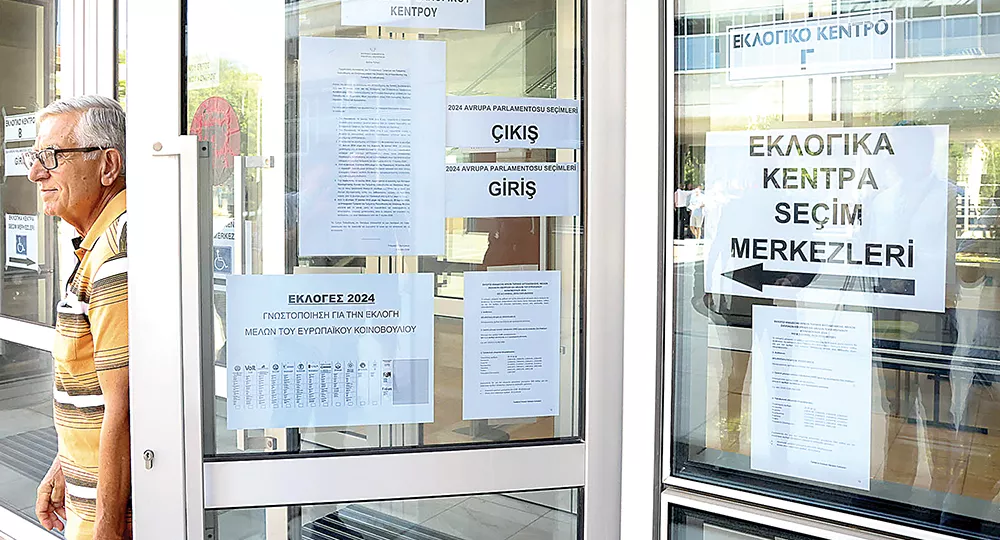
However, the disappointment expressed in the article does not reflect the perception that emerged within the Turkish Cypriot community in the occupied territories regarding the necessity of election, or in the specific case, the re-election of the candidate with AKEL, Niyazi Kızılyürek, or the other two Turkish Cypriot candidates. Turkish Cypriots, even within the progressive camp supporting a federal solution, appeared divided, did not turn out to vote, and sent a message that what happens in Brussels does not concern them.
From the “Turkish-speaking Cypriots” to “one state, three nations”
The division that ultimately led to the low voter turnout became apparent early on, as calls for Turkish Cypriots not to vote were made not only by the right-wing rejectionist front, which now openly supports the two-state solution but also by prominent figures within the CTP, such as Kutlay Erk, who boldly stated that the European elections were not relevant to Turkish Cypriots. Journalistic sources reported that some individuals expressed dissatisfaction with Niyazi Kızılyürek.
Meanwhile, the situation in the occupied territories has changed significantly compared to five years ago, when a large segment of Turkish Cypriots believed they could invest in European ideals. Turkey under Erdoğan has infiltrated the community politically, economically, and, most notably, culturally. The shift towards Islamic states, following the “TRNC” becoming an observer member in the Organization of Turkish States, offers hope for openings and economic investments. Relations with Azerbaijan, enriched by their victory in Karabakh and newfound oil wealth, appear to challenge international community decisions regarding the recognition of the pseudo-state, reflecting a climate that excludes Europe and proposes alternative solutions for the Turkish Cypriot community.
Moreover, Aliyev’s overtures in the occupied territories, marked by “high-level” meetings unprecedented in the past, and the motto of “one nation, three states” between Turkey, Azerbaijan, and “TRNC,” promoting a political and cultural alliance vastly different from Europe, are indicative and concerning developments.
Adding to this equation the new policy of rejecting the federal solution, disappointment over the collapse of talks in Crans Montana, and the fact that the presence of a Turkish Cypriot MEP elected with a Greek Cypriot party failed to address issues concerning the Turkish Cypriot community, such as mixed marriages and Cypriot citizenship, which the Republic of Cyprus insists are integral to the overall Cyprus solution, the disappointment of Turkish Cypriots becomes evident. The participation in the electoral process, with the candidacy, of the three Turkish Cypriots aimed to convey a Cypriot identity message, but it wasn’t strong enough to overcome the disappointment and the search for alternative images and ideals. The apparent victory and ultimately winning one seat in the European Parliament by ELAM was the cherry on top of the -bitter- cake.
Triumphant speeches by Tatar and concerns about the solution
Relief was evident in the rejectionist camp over the non-election of a Turkish Cypriot MEP in recent days in the occupied areas. Ersin Tatar, the Turkish Cypriot leader who briefed the so-called parliament on developments in Cyprus, mentioned at least three times during the session the non-election of Kizilyurek, mocking the result and expressing his joy. The Secretary-General of the National Unity Party, Oğuzhan Hasipoğlu, stated, “The elections showed that forming a consensus for a federation is unlikely and that Turkish Cypriots saw no benefit from the European Parliament.” Meanwhile, the once golden boy of politics in the occupied territories, Kudret Özersay, said, “There should be two separate electoral lists, and Turkish Cypriots should elect their own two MEPs.”

