


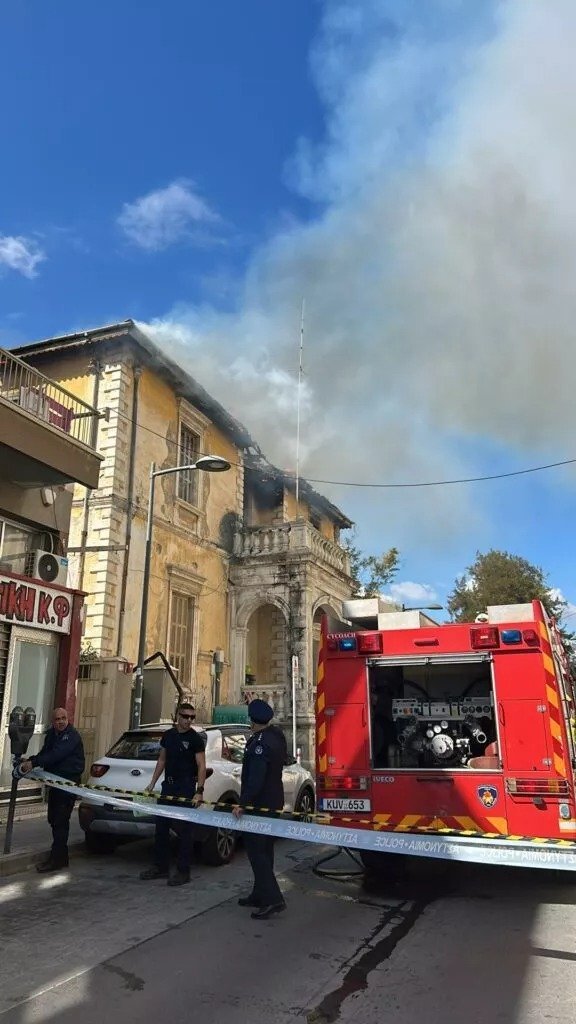
A magnificent mansion from another era burned down yesterday in the center of Limassol, reminding us of the existence of thousands of dormant buildings across the island.
Buildings that, for various reasons, voluntary or involuntary, have been abandoned by their owners, remain open wounds, sources of neglect and pollution, and now shelters for the homeless. Mainly in cities.
Sometimes they collapse, sometimes they burn, and traces of history disappear.
Various entities have dealt with the issue over time, but they stumble upon the property ownership system.
In Greece, where the problem is the same, the creation of a registry of abandoned properties in each Municipality was decided with the aim that, once recorded, they would be attributed to individuals who would be able to manage them for 50 years, after restoring them.
The proposal followed the death of a 22-year-old student who was crushed by a wall of an old building in Larissa.
The Cyprus Scientific and Technical Chamber has repeatedly dealt with the issue by proposing, among other things, a revision of the legal framework to allow drastic measures by the competent authorities (including confiscation and utilization of the building or property as happens in foreign countries) in order to prevent building collapses and the loss of significant buildings of great cultural importance.
Another proposal of the Technical Chamber was that with every urban planning permit granted for a tall building or a large development, the owner should also undertake to fund the full restoration of a dangerous/dilapidated listed building or a monument.
The issue was also addressed by the Green Party MP, Charalampos Theopemptou, comparing examples from other countries, such as densely populated Netherlands, which does not leave buildings unused.
One of his proposals was for residential units that have been abandoned to be taken over by the state – after legal obstacles are overcome – and used for housing low-income families who currently receive rent allowance.
“The state,” he explained, “could directly assign a Social Enterprise to identify such buildings and undertake long-term leasing, repair, and delivery to the relevant Services for use by families in need of housing. It is not right for there to be people in need of housing and these houses to remain empty.”
Beyond the social, ethical, and cultural reasons that necessitate the preservation and utilization of dormant buildings, there are also security reasons.
A fact that was demonstrated by yesterday’s incident in Limassol. Not only did a historic building burn down, but it also endangered neighboring buildings and people inside. Abandoned buildings constitute a dormant wealth that, for many reasons, needs to be utilized.

