


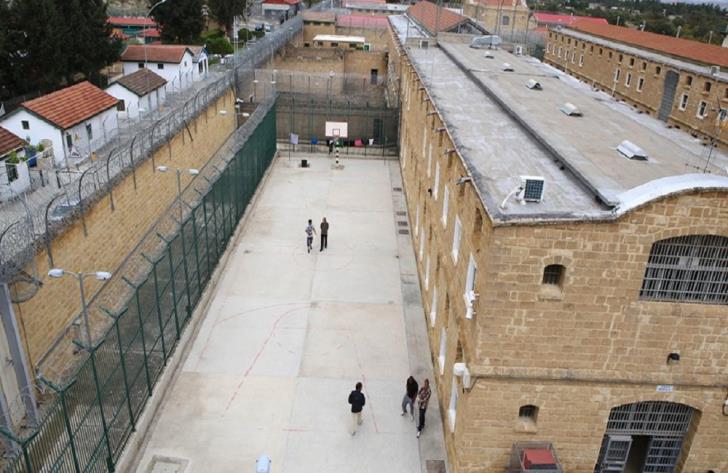
An action plan, developed in coordination with the Ministry of Justice, has commenced implementation to combat the infiltration of mobile phones and narcotics into Central Prisons.
Haris Philippides, the newly appointed Deputy Director of Prisons, disclosed yesterday that this phenomenon affects prisons worldwide, and the objective is to curtail it, if not eradicate it entirely.
Following a visit by members of the House Committee on Legal Affairs to the prisons, where they inspected Special Wing 8, the area housing minors and individuals up to 21 years old, Philippides, in his inaugural public appearance, outlined his three priorities: modernising the correctional system, reducing overcrowding, and tackling corruption.
Particularly regarding corruption, he emphasised it as one of his red lines, asserting zero tolerance for any cases within the prison staff, whom he supports for working under challenging conditions.
“Staff must be supported, and their rights, as well as those of detainees, must be upheld,” he stated.
Regarding the detention area for young people, the deputy director said that satisfaction would be achieved if this space were relocated outside the prisons with the necessary standards for housing children.
In his remarks following their observations within the wing for young inmates, Nikos Tornaritis, the committee’s president, remarked that the space was not in poor condition.
The MPs themselves noted that young inmates do not come into contact with serious offenders, nor can any objects from other areas be thrown into their recreational space. However, the basketball court is used in the morning by serious offenders and after 11 a.m. by young convicts, creating the possibility for items to be left behind by the former and found by the latter.
According to Tornaritis, it is time for the Cypriot state to seriously consider relocating the Central Prisons. “We need prisons fit for 2020, not 1960,” he stated.
According to information they received, he added, today the prison population exceeds 1,000 individuals, while their capacity is 545.
Regarding the area for detaining young people and minors, the committee president stated that there are currently 31 individuals detained up to the age of 21 and 4 below the age of 18.

