


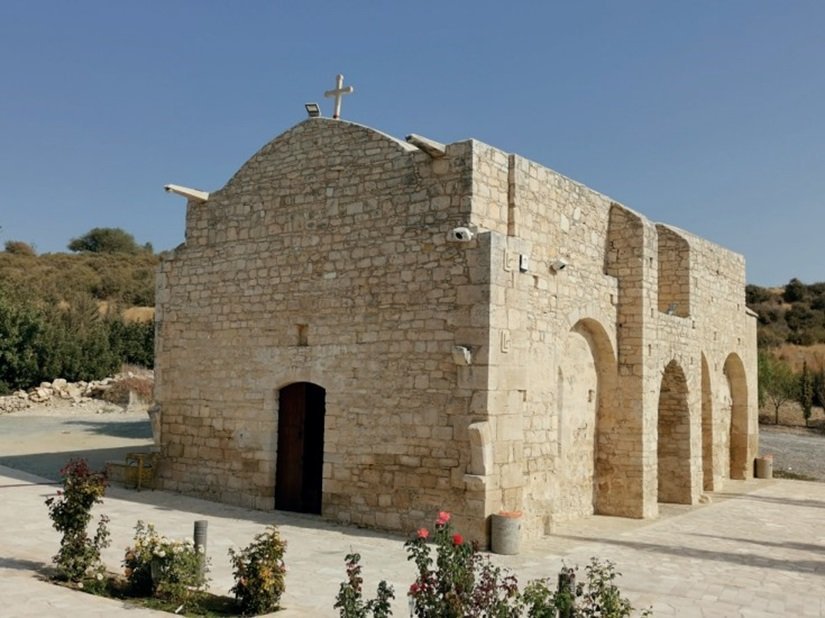
Pottery discovered during the initial excavation season at Panagia Karmiotissa in Limassol has been dated back to the 13th century, potentially confirming the site’s occupation during a period that aligns with the Carmelites’ arrival in Cyprus, as reported by the Department of Antiquities following the project’s first phase.
The department’s announcement detailed that the dig occurred around the Panagia Karmiotissa church, led by Dr. Andreas Nicolaides and Dr. Margot Hoffelt.
The project is the culmination of a two-year intensive partnership between the Eratosthenes Centre of Excellence (ECoE) at the Cyprus University of Technology and the CNRS Laboratory of Medieval and Modern Archaeology in the Mediterranean (LA3M), supported by the Cyprus Department of Antiquities.
The selection of this site was influenced by various factors, including historical documents, geographical features, place names, and local lore, suggesting it was the location of a Carmelite establishment in the 13th century.
Nonetheless, architectural analysis of the existing church suggests it was constructed no earlier than the 14th century. This discrepancy necessitated further excavation to explore deeper historical layers.
The report specifies that three exploratory trenches were opened: two on the northern terraces and one behind the church’s apse.
In the furthest east trench, multiple levels of habitation were identified, with pottery from the middle layer dating to the 13th century, reinforcing theories of the site’s historical significance during the Carmelite period.
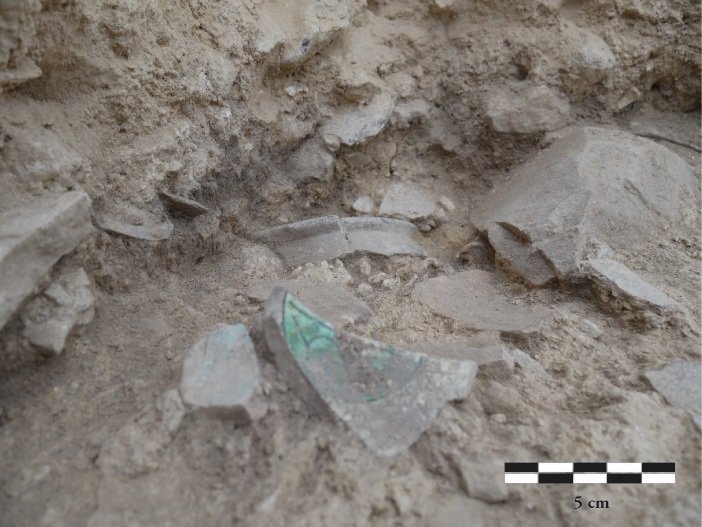
Additionally, in the trench on the western terrace, evidence of two post-Byzantine habitation phases was found, including several postholes. Behind the church’s apse, numerous large pits aligned east to west were uncovered, suggesting former grave sites likely associated with the church’s cemetery.
The stratigraphy where these pits were located abuts a staircase carved into the bedrock, leading towards an area beneath the church’s apse.
Findings, along with ground-penetrating radar surveys inside the church, hint at significant structures below, adding layers of historical intrigue to the site’s narrative.

