


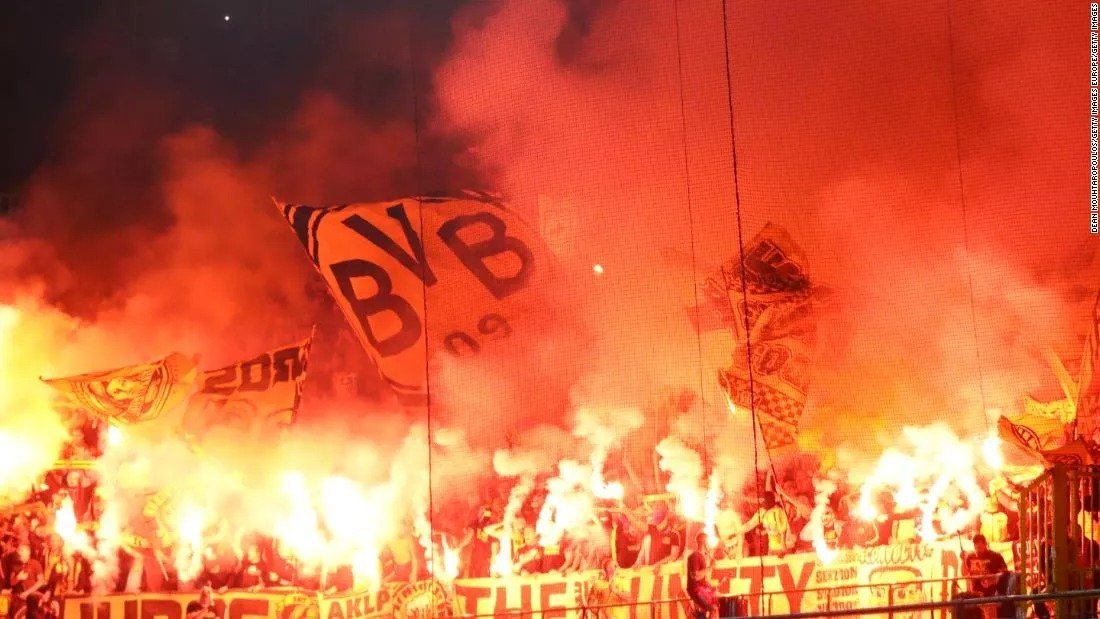
For years, we’ve been hearing the same things, and those responsible are consumed with in-depth analyses of how to address the phenomenon of hooliganism. When? Right after an incident!
After that what? They’ll address it again when the next incident occurs! And once again, the same analyses and discussions will continue until the issue is swept under the rug.
Really, how many of those who sit and analyse the issue of hooligans and extreme behaviour in stadiums have ever bothered to go and sit in those stands to see firsthand what is really happening? From the luxury boxes with comfort and amenities, one cannot understand, let alone perceive, what occurs at the two ends of the stadiums. If you don’t see things from the stands, you’ll hardly comprehend, and certainly, you can never address the underlying issues.
I won’t delve into who threw more flares, or who threw firecrackers because then we’ll all get bogged down in assigning blame, discussing who is more responsible, who is less, who threw the first stone, and we’ll end up debating the chicken-and-egg theory. And in the end, as has been happening for years, we won’t reach any conclusions.
Certainly, we’ll never achieve the goal of combating hooliganism, a source of danger not only for football but for society as a whole.
At some point, if we want to move forward, we must separate hooliganism from organised supporters. For some, the two are synonymous. When they say organised fans, they mean hooligans. And when they talk about hooliganism, they look towards the stands where organised supporters gather. However, a clear distinction can be made between the two, and doing so will contribute to addressing negative situations in Cypriot stadiums.
The hooligan who cares little about football and his team, whether he goes to the stadium or not, is different from the organised fan who goes there to support his team on the field. Currently, in Cyprus, there is a mix of hooligans and organised fans in the stadium stands. What needs to be done is to separate the two and eliminate the cancer of hooliganism from the organised supporters.
How can this be achieved? By adopting the German model, which – personally, I believe – is far better than the British one that Cyprus has been unsuccessfully trying to copy and implement for years. Let’s examine the “fan action plans” that started to be implemented in Germany four decades ago. They began in Bremen after a fan’s death and aimed at preventing hooliganism.
According to research published in the Greek version of “Kathimerini,” social and educational organisations throughout Germany – usually led by social workers – inform and educate young fans about extremism and the development of a diverse society. These organisations, usually affiliated with a German football team, conduct various activities with young fans, provide advice, even for educational or professional rehabilitation, organise trips, and publish magazines written by young fans.
Their goal is simple: “infiltrate” the ranks of organised fans and encourage young fans to channel their energy positively. They also mediate between the most radical parts of the stand, club administrations, and law enforcement.
The work of all these organisations seems to be bearing fruit. Germany, which in the 1990s was plagued by neo-Nazi groups within stadiums, now sees these elements significantly diminished outside the playing areas. They removed hooliganism, retained the organised fans, and kept ticket prices at a level that even the poorest population could afford. All of this, combined with a strict legislative framework, helped clean up German stadiums.
The same can be achieved in Cypriot stadiums. The key is determination and courage.
Read more:

